Advanced Rapid Prototyping Solutions by JC Precision Craft
Vacuum casting is a highly efficient manufacturing process widely used for producing high-quality prototypes and low-volume production parts. It bridges the gap between rapid prototyping and mass production, offering excellent surface quality, accurate detail reproduction, and cost-effective manufacturing.
At JC Precision Craft, we provide professional vacuum casting services that help customers quickly transform master models into functional, visually accurate, and performance-reliable components. This process is especially valuable for industries that require fast iteration, design validation, and small-batch production before moving to injection molding or mass manufacturing.
What Is Vacuum Casting?
Vacuum casting is a molding process that uses a silicone mold and vacuum environment to reproduce high-precision parts from a master model.
The process typically involves:
- Creating a master model (usually CNC machined or 3D printed)
- Producing a silicone mold based on the master
- Placing the mold into a vacuum chamber
- Injecting liquid polyurethane or resin material
- Removing air bubbles using vacuum pressure
- Curing, cooling, and demolding the final part
This controlled process ensures that the final replica closely matches the original design in both shape and surface quality.
Working Principle of Vacuum Casting
The vacuum casting process relies on three core systems: the master model, silicone mold, and vacuum environment.
1. Master Model Preparation
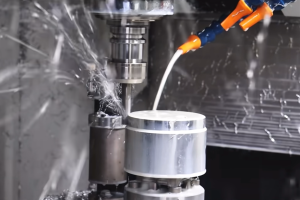
A high-precision master model is first created using CNC machining or 3D printing. This model defines the final geometry, surface detail, and structural accuracy of the product.
2. Silicone Mold Creation
A silicone mold is produced by encapsulating the master model. Once cured, the mold is carefully cut open and the original model is removed, leaving a precise negative cavity.
3. Vacuum Environment Setup
The silicone mold is placed inside a vacuum chamber. This step is critical for eliminating air trapped during material injection.
4. Material Casting
Liquid polyurethane resin or similar materials are poured into the mold under vacuum conditions. The vacuum ensures smooth flow and complete filling of complex structures.
5. Curing and Solidification
The material is allowed to cure and harden inside the mold, taking on the exact shape and details of the master model.
6. Demolding and Finishing
After cooling, the finished part is removed, trimmed, and optionally surface-finished based on customer requirements.
Advantages of Vacuum Casting
Vacuum casting offers a wide range of benefits, making it a preferred solution for rapid prototyping and low-volume production.
High-Precision Detail Replication
Vacuum casting is capable of accurately reproducing complex geometries, fine textures, and detailed surface features.
This makes it ideal for parts requiring:
- High visual accuracy
- Fine surface textures
- Complex structural details
- Functional design validation
At JC Precision Craft, we ensure every cast part closely matches the original master model in both geometry and finish quality.
Excellent Surface Quality
The vacuum environment eliminates air bubbles during casting, resulting in:
- Smooth surfaces
- Minimal defects
- High aesthetic quality
- Reduced post-processing requirements
This makes vacuum casting especially suitable for appearance prototypes and consumer product validation models.
Fast Production Cycle
Compared with traditional manufacturing methods, vacuum casting significantly reduces production time.
Benefits include:
- Rapid mold creation
- Fast part replication
- Short lead times
- Quick design iteration
This allows engineers and designers to accelerate product development and testing phases.
Cost-Effective for Small Batches
Vacuum casting is highly economical for low-volume production.
It reduces:
- Tooling costs
- Material waste
- Production setup time
This makes it an ideal solution for startups, R&D teams, and pre-production validation.
Material Versatility
A wide range of polyurethane resins and casting materials can be used to simulate different mechanical properties, including:
- Rigid plastics
- Rubber-like flexible materials
- Transparent materials
- Heat-resistant compounds
- Impact-resistant resins
This flexibility allows products to closely match final production material performance.
Suitable for Complex Designs
Vacuum casting is especially effective for parts with:
- Undercuts
- Thin walls
- Complex internal structures
- Fine surface textures
It can replicate designs that are difficult or expensive to produce using traditional machining or molding methods.
Improved Product Development Efficiency
By enabling fast iteration and functional testing, vacuum casting helps reduce development risks and improve product design quality before mass production.
Environmentally Friendly Process
Vacuum casting produces minimal waste and uses efficient material utilization, making it a more sustainable manufacturing method compared to many traditional processes.
Applications of Vacuum Casting
At JC Precision Craft, vacuum casting is widely used across multiple industries, including:
Automotive Industry
- Interior components
- Dashboard prototypes
- Functional testing parts
Aerospace Industry
- Lightweight structural prototypes
- Aerodynamic validation models
Consumer Electronics
- Product housings
- Design appearance models
- Functional enclosures
Medical Devices
- Device prototypes
- Ergonomic testing models
Industrial Equipment
- Functional prototypes
- Pre-production validation parts
Why Choose JC Precision Craft for Vacuum Casting?
At JC Precision Craft, we combine engineering expertise with advanced manufacturing capabilities to deliver high-quality vacuum casting solutions.
Our advantages include:
- High-precision master model creation (CNC & 3D printing)
- Professional silicone mold fabrication
- Stable vacuum casting process control
- Wide range of material options
- Fast turnaround for prototypes and small batches
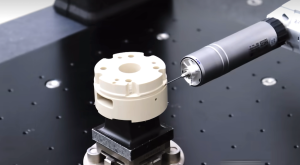
- Strict quality inspection standards
We ensure every part meets both functional and aesthetic requirements, supporting your product development from concept to production.
From Prototype to Production with Confidence
Vacuum casting plays a crucial role in modern product development by enabling fast, accurate, and cost-effective prototyping.
At JC Precision Craft, we help customers bridge the gap between design and manufacturing by delivering reliable vacuum casting solutions that support innovation, reduce development time, and improve product success rates.
Whether you are validating a new concept or preparing for small-scale production, our team is ready to support your project with precision and expertise.
Contact JC Precision Craft
Looking for high-quality vacuum casting services for your next project?
Contact JC Precision Craft today and discover how our rapid prototyping solutions can help you bring your ideas to life faster, with accuracy you can trust.